

This is an extraordinary era of technology, where algorithms, AI, and UX have become integral parts of every business and industry, bringing opportunities, innovation, and growth. All of these make us feel challenged, energized and highly motivated to get out of bed every morning and tackle new challenges. Companies grow, opportunities for leadership arise, and we start to question ourselves: am I ready for leadership? I studied to be an engineer – mostly “hard skills”. How can I prepare myself to lead others?
In my case, I’m an avid reader, so it was only natural for me to look for inspiration in books. Our office library is full of treasures, and I usually come back from trips with an extra heavy backpack, filled with books. So, without further ado, my top 5 recommendations!
Trillion Dollar Coach
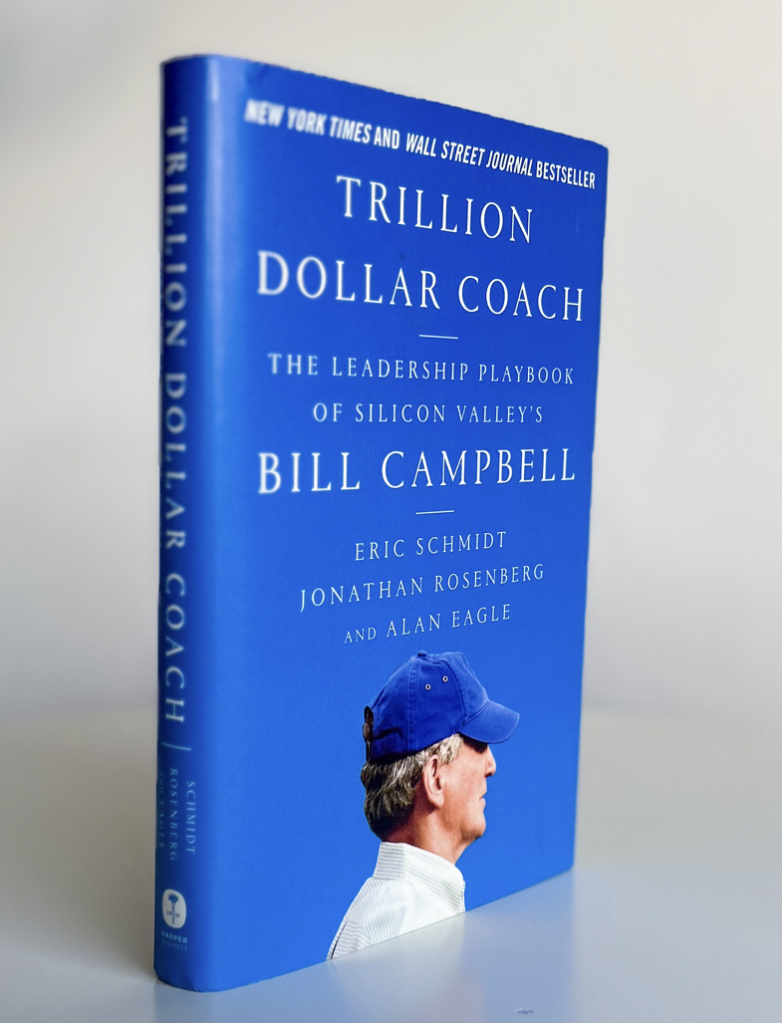
This was the first book I read when I became VP of Engineering. I was going to be in charge of leading our internal coaching programme, and I must admit I felt horribly unprepared. Máximo, our CEO, recommended this book as a summer read, especially because of the great anecdotes it has. It tells the story of Bill Campbell, Silicon Valley’s most famous basketball coach turned business coach. Among his coachees we can find Steve Jobs, Larry Page, Sergei Brin, Mark Zuckerberg, Sheryl Sandberg, Tim Cook, Jeff Bezos, Mary Meeker, John Doerr, Ruth Porat, Scott Cook, Brad Smith, Ben Horowitz, Marc Andreessen… and the list goes on. (I know – my definition of summer read is questionable at best).
My favorite quote from the book is the following: “It’s the people. People are the foundation of any company’s success. The primary job of each manager is to help people be more effective in their job and to grow and develop.” I love it because it captures the essence of my job description with the right focus: People. It also gives us a guideline for making hard decisions: we should have our “first principles” – immutable truths that are our company’s foundation, and guide decisions from there.
Something that is quite interesting about this book is that it is a collection of stories from his life, and the people whose lives were changed with his coaching philosophy. His biggest tenets were empathy, trust, collaboration, openness and continuous learning. The role of feedback and 1-on-1s is brought front and center, and many of the guidelines provided now work as starting points for my 1-on-1 meetings.
Another concept that I liked was the difference between a coach and a mentor: mentors share their wisdom with us, while a coach pulls up their sleeves and helps us identify areas we can improve and hold us accountable for those improvements. By doing so, coaches help people realize their full potential, oftentimes becoming key players in articulating different styles, personalities and backgrounds.
As a final reflection, the most significant lesson and the one that resonates with me the most is that he “gave us permission to care”. Everyone he coached felt loved, genuinely cared for, and were both cheered on and challenged. This is also very linked to other books in the list, but it’s important to remember that: As managers, you will develop personal relationships with your team, and that is a good thing!
What you do is who you are
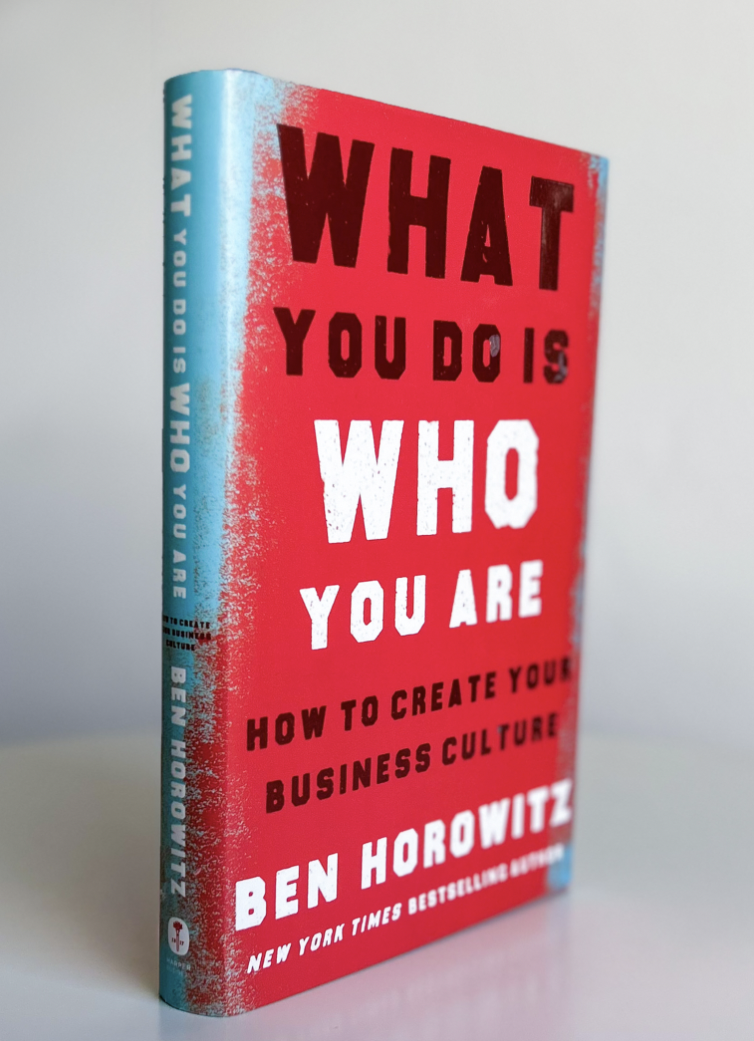
As a company, we are experiencing exponential growth. Taking care of our culture and its intentional development had a profound impact on my year. I found many gems in this book that presents anecdotes from a wide variety of places, such as the Haitian slave rebellion led by Toussaint Louverture or Genghis Khan’s leadership style.
I have to admit – I have always felt very proud of our culture as a team, but hadn’t reflected much as to what a strategic advantage it gave us as a company. The author emphasizes that without a strong company culture, it’s very hard to succeed in the modern business world. In our day and age, where decisions have to be made fast, a strong culture can work as guiding principles for our team.
Setting clear “cultural norms and operating principles” help create consistency and alignment, and avoid headaches.
One aspect I personally liked, that set apart this book from many others of this same topic, were the anecdotes and histories mixed in with business recommendations, and how he dared to take culture out of the workspace and look for examples in other organizations. A prison gang leader might not sound like the best role model, but some of his decisions and mistakes can teach us a lot.
The author argues that our company’s culture is defined by the practices and behaviors – not just the values and beliefs. When leaders succeed in creating strong and distinctive cultures, these can work as a set of guidelines for everyone to follow – whether you meant it or not! He is not afraid of putting leaders on the hot seat, and stating plainly that if leaders don’t walk the talk and lead by example, words are useless. This is also shown in some of the historical anecdotes (but I won’t give spoilers!)
Finally – the role of rituals was something I particularly enjoyed. Back in the day in our office, on your first day of work, you had to assemble your chair with your teammates. This was a great ice breaker, and it led to lasting friendships (and some wonky office chairs). With our growth and the COVID pandemic, it’s something we stopped doing, but new traditions have started (such as music nights and soccer Fridays). It’s pretty cool to get reinforcement on things we love.
Radical Candor
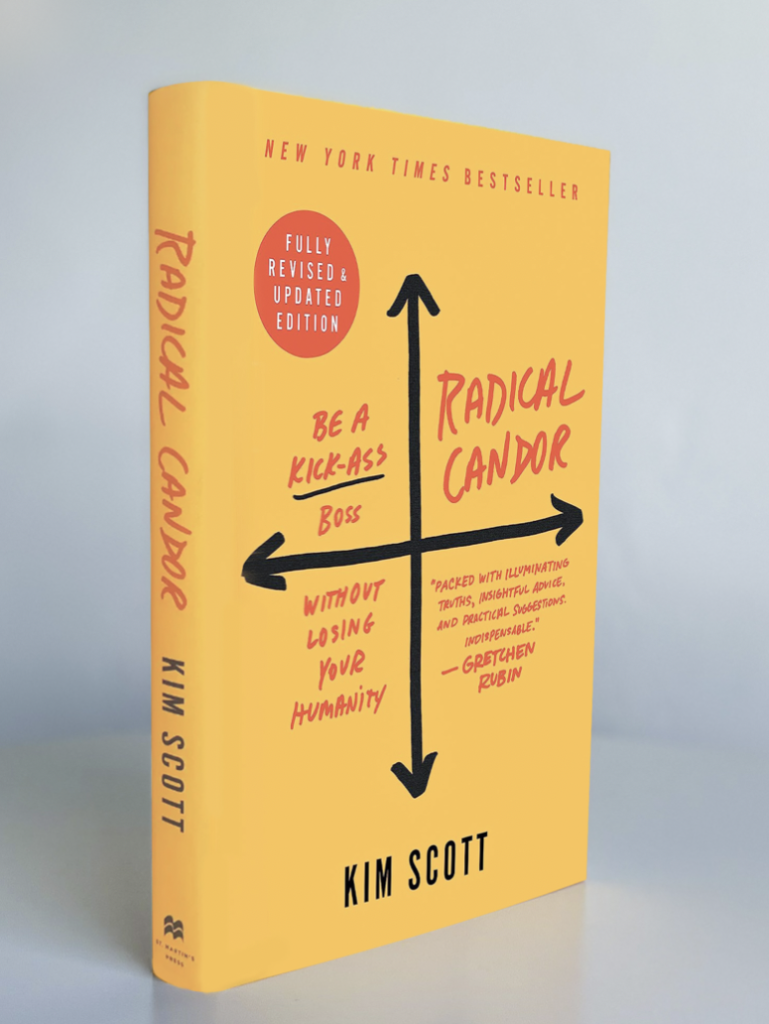
Máximo, our CEO, mentioned this book in each and every one of our 1-on-1 meetings. Each time I had to prepare for a difficult conversation, he’d quote Kim Scott’s wisdom to help me prepare for it. Since he is also quite a book worm, the fact that this book had been so meaningful for him made me curious. So, I decided to give it a chance.
In a nutshell, this is a book about being a great boss – helping people grow while being a decent person. It focuses on honest and straightforward feedback and fluid communication – combining empathy, compassion and a will to challenge. I’ll try to summarize it:
As managers, we have two dimensions we’ll focus on for this framework:
- Care personally
- People come to work, and we develop a relationship with them
- Challenge directly
- We feel empowered to tell someone when their work is good – but also when it is not.
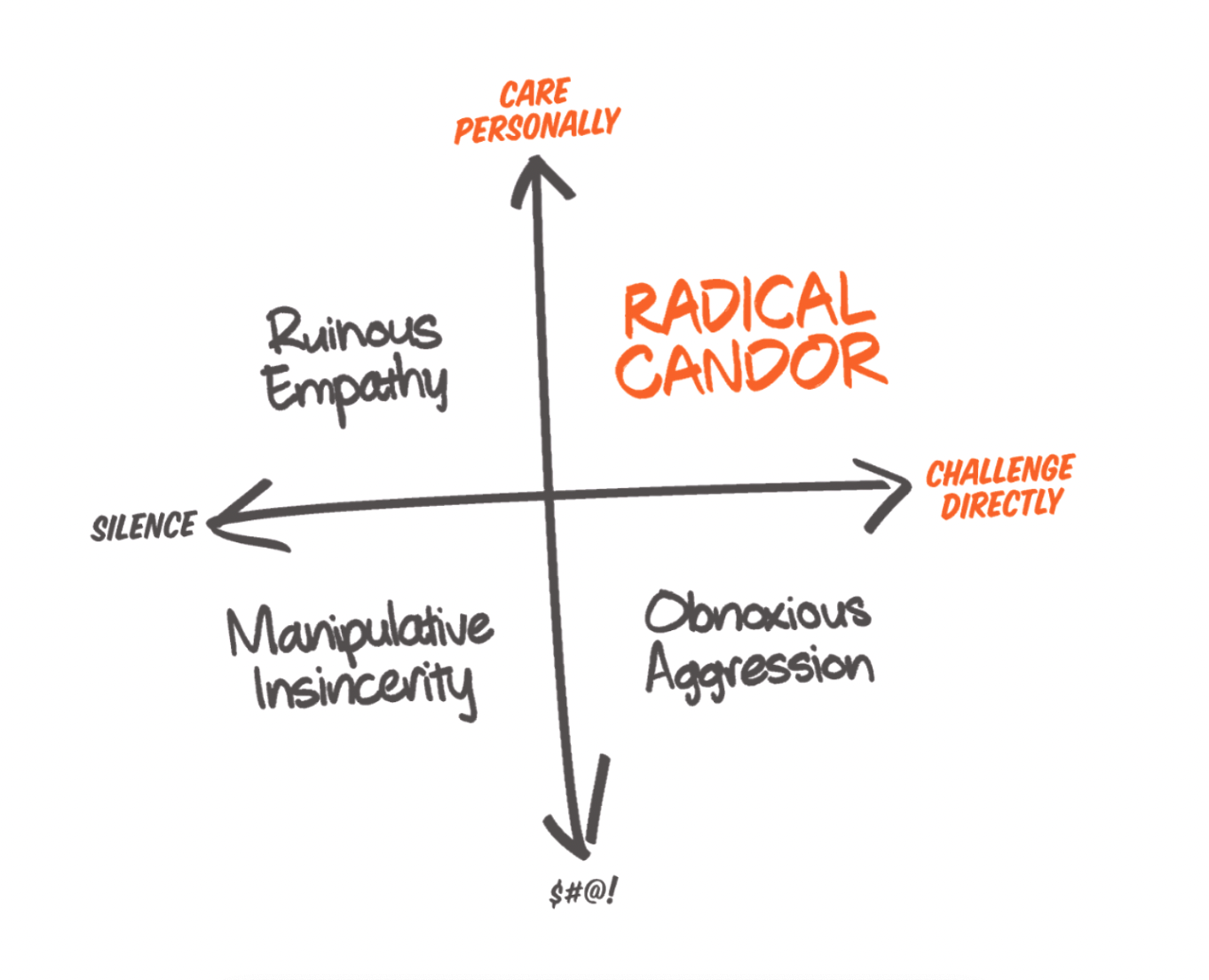
Let’s put this into an example: Someone comes to the office, and they have their shirt on backwards.
Don’t Care Personally
- Challenge Directly: You laugh, point at them and say loudly: “Hey, did you get dressed in the dark?”
- Don’t Challenge Directly: You whisper to the rest: “Can you believe that? If it happened to me, I’d realize it immediately”
Care Personally
- Don’t Challenge Directly: You don’t do anything so as not to make them feel self conscious – it’s not a big deal, they’ll realize it eventually
- Challenge Directly: You kindly take them somewhere quiet and tell them: “Hey, you’ve got your shirt on backwards – just wanted to let you know in case you want to deal with it”
What the book aims to highlight is that often, Radical Candor can make us uncomfortable. But when we care about someone, it’s important to challenge them directly to help them grow – else, how will they know they have a wardrobe malfunction?! And even if hard conversations are hard for us – they’ll be even harder coming from someone who doesn’t care as much.
Another point we want to make; caring about our teammates isn’t enough if we don’t dare to challenge them directly. If we really want to help them, it’s important to both care and challenge.
You might think that some of the ideas aren’t groundbreaking – but the examples she gives (and she isn’t afraid of showing her own mistakes) helps drive the point home. She even tells an anecdote in which Sheryl Sandberg told her she was sounding stupid – not something anyone would like to admit in a popular management book, where your own voice and authority are key to your credibility (and the book’s!).
Right now, I am reading her second book, Just Work, and it’s inspiring to see how she challenges some of her own ideas. I think that is a very brave thing to do – especially after penning a best seller. She mentions how it can be hard for women or minorities to implement Radical Candor without being labeled, and how many of her ideas and experience came from a place of privilege. Interesting read – and in her amusing, no B-S style, which is always refreshing!
When they win you win
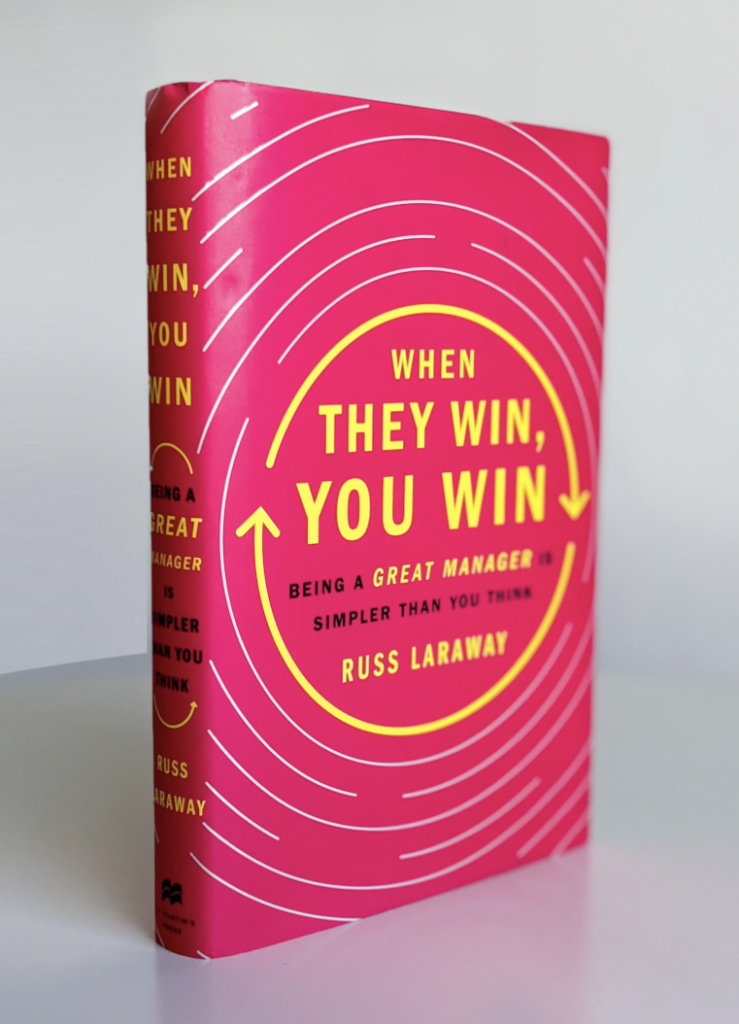
After reading “Radical Candor,” I discovered a book written by one of the co-founders of Candor Inc., Russ Laraway. I liked the premise on the cover: “Being a great manager is simpler than you think.” I began reading it on a train from Boston to NY, and as snow fell outside my window, I was hooked. There was something about this book that made me feel like the author truly understood his craft. It felt as if I were having a conversation with an older sibling who had been through it all.
In the introduction, it talks about the three key elements of leadership: Direction, Coaching and Career. In his own words.
- Direction — Good managers ensure that every member of their team understands exactly what is expected and when it is expected.
- Coaching — Good managers coach their people toward both short- and long-term success, helping them understand what they should continue to do and where and how they can improve.
- Career — Good managers invest in their people’s careers in a way that considers their long-term goals and aspirations, beyond the four walls of the current company, and certainly beyond their next promotion.
- The premise is that as managers, our goal is to have engaged employees – and the manager seems to be the biggest driving force behind good (or bad) employee engagement. The author argues that if we focus on these three things, these will help our teams become engaged, and engaged employees deliver the expected results. This is shown throughout the books as 3 <-> E <-> R.
- One of the things I liked the most about this book was that it was eminently practical: It provides sample questions that we can use for self-assessment or to ask our teams to assess us. It also offers guidelines to help organize our 1x1s, (which was tremendously helpful when preparing our internal team’s training material.). Additionally, the book frequently references other books, demonstrating the author’s passion for team building and constant pursuit of learning.
Another aspect that resonated with me was when he said that being busy often competes with being focused. He emphasizes the need to learn how to subtract and to help our direct reports in doing the same. There’s an overall feeling that you must be busy to be productive, and it felt refreshing to read that it’s okay to do less and give permissions to do less. It usually leads to more productivity.
I also liked the overall style. One of the first chapters has this hilarious title: “You just can’t suck as a manager.” Okay, please, tell me more! Another quote that I highlighted was: “First, know what you expect. Then, tell your team what you expect”. How many times have we failed for not being 100% aware of what was expected of us? Do we always know our success criteria?
The two last things I want to highlight are the following: he encourages us to use praise as a learning tool, and to always ask permission when we need to have a tough conversation. I liked them because they both prioritize our direct reports as human beings. It’s unrealistic to expect that everyone will always be in the best space to listen to criticism. Similarly, it’s a good idea to give praise when it’s due – positive feedback encourages us to continue doing what we were doing right. My personal style is very caring and hands on – so reading this helped me feel like I’m on the right track (at least in some aspects! 😀 )
Trust and Inspire
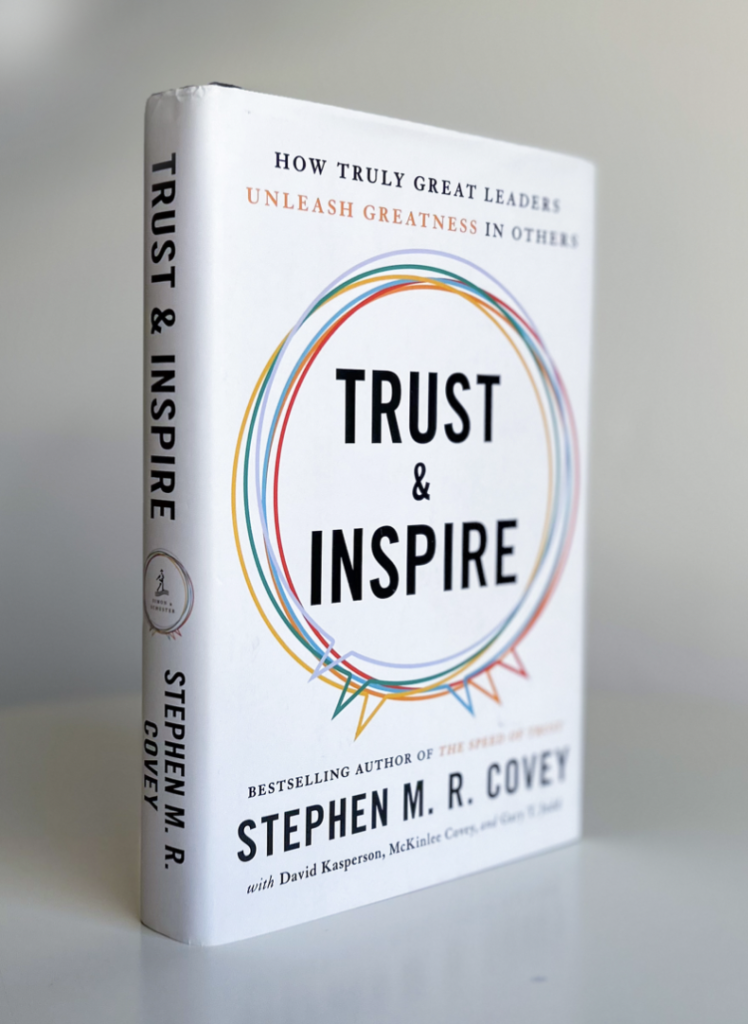
Have I mentioned I usually bring home three or four books from every trip? This year was no different. While trying to defrost on a very cold Massachusetts morning last December, we entered the Harvard Book Store with my husband.
Forty-five minutes later, we emerged with three (quite heavy) books, to the bemused looks of our parents. One of those books was Stephen Covey’s “Trust & Inspire”. I liked the premise of trying to “unleash greatness in others” – the idea that as a leader you empower others to grow, to achieve new heights.
This book works around a main idea: the world has changed, the nature of work, the workplace, the workforce and choice – all have changed.
In response to this new paradigm, the author states that leaders should focus on three main principles: who you are, how you lead, and how you help people be inspired. We are in an era in which teams need people who have more than just knowledge – we need knowledge, inspiration and passion.
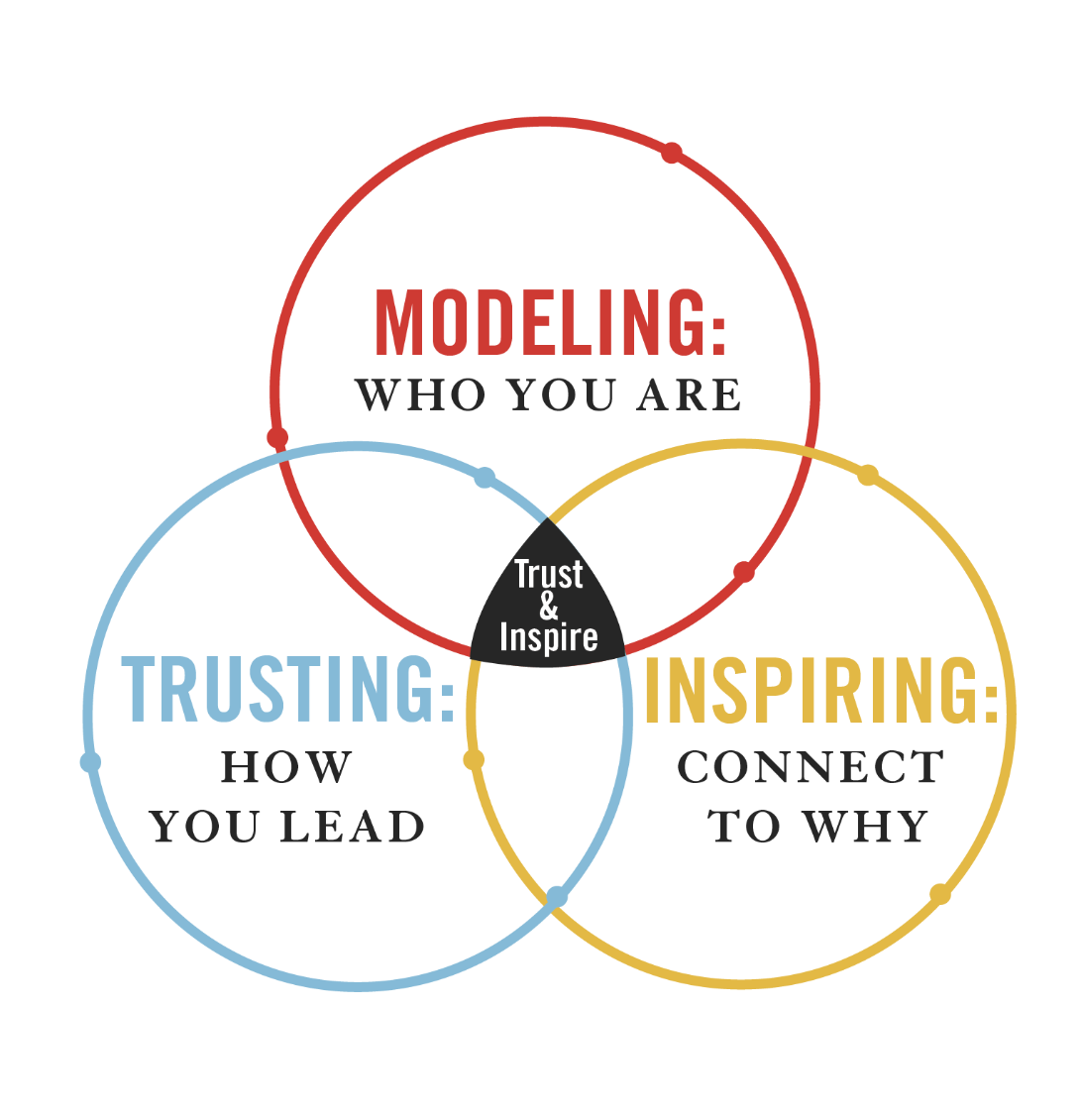
In this new era, Covey claims, the old “Command and Control” leadership style is out of date and out of place. We need a new style, which he names “Trust and Inspire”. To achieve this style, we need to model the behavior (again – very similar ideas we’ve heard before), you need to trust your team, and you need to help them find inspiration. A quote from Eleanor Roosevelt featured in the book summarizes this: “A good leaders inspires people to have confidence in the leader; a great leader inspires people to have confidence in themselves”.
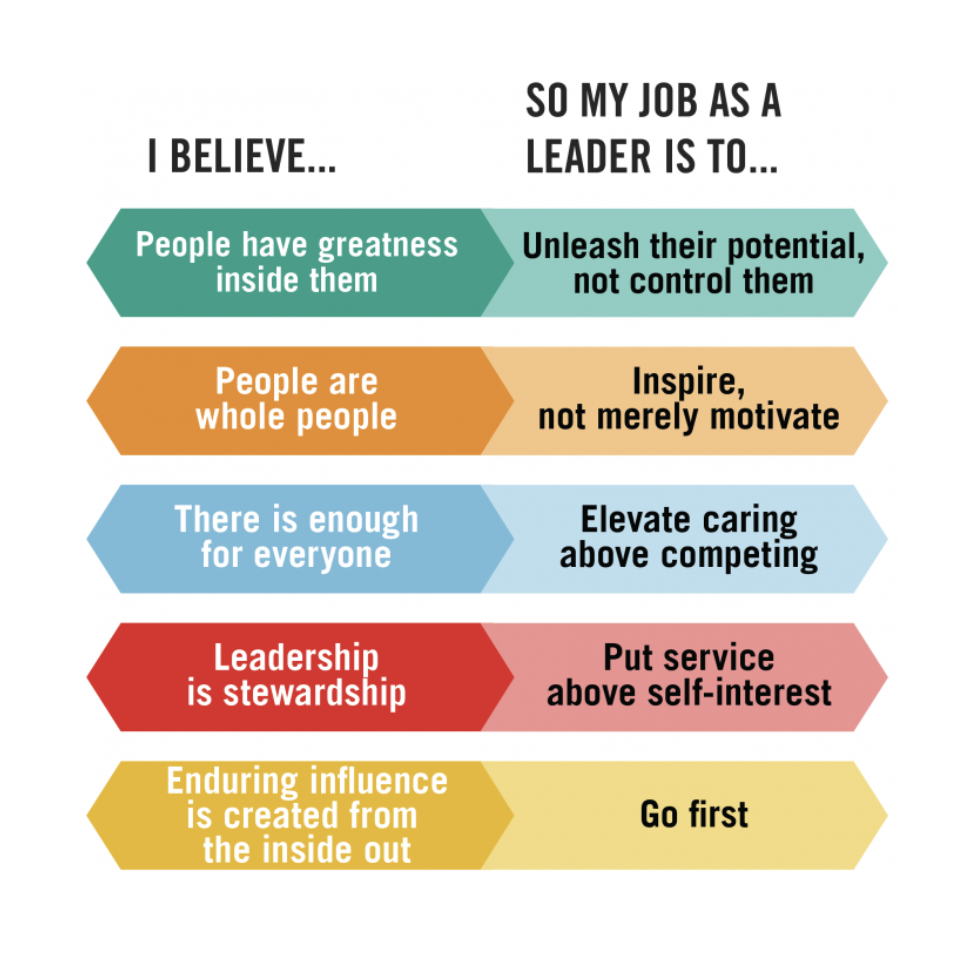
One aspect I really liked about this book was that it included “exercises” – for example, at the end of each chapter, it included notes that are easy to remember. For example: “There is enough for everyone, so my job as a leader is to inspire, not merely motivate”. These are great to keep at hand, or to use as training materials for new generations of leaders.
Another interesting “gift” was that the author went one extra mile, and included an entire section on “barriers” we might see as we try to implement this. For instance, some reasonable doubts such as “these won’t work here”, or some fears such as “what if it doesn’t work” or “what if I lose control”. These fears are reasonable, and Covey includes a set of self-assessments to identify them, and ways to tackle them in a respectful way.
Conclusion
So, that’s my list: the five books I found most inspiring for this journey I’m on. It’s unrealistic to expect that books alone will do the trick – now comes that fun part that is to select which aspects of all of these toolboxes we want to start working on, which ones apply best to your situation, and get moving! One of the best takeaways is that nobody is perfect – and even these great managers have enough mistakes to fill the pages of a book! So, let’s roll up our sleeves, and get to work!
Stay ahead of the curve on the latest trends and insights in big data, machine learning and artificial intelligence. Don’t miss out and subscribe to our newsletter!