
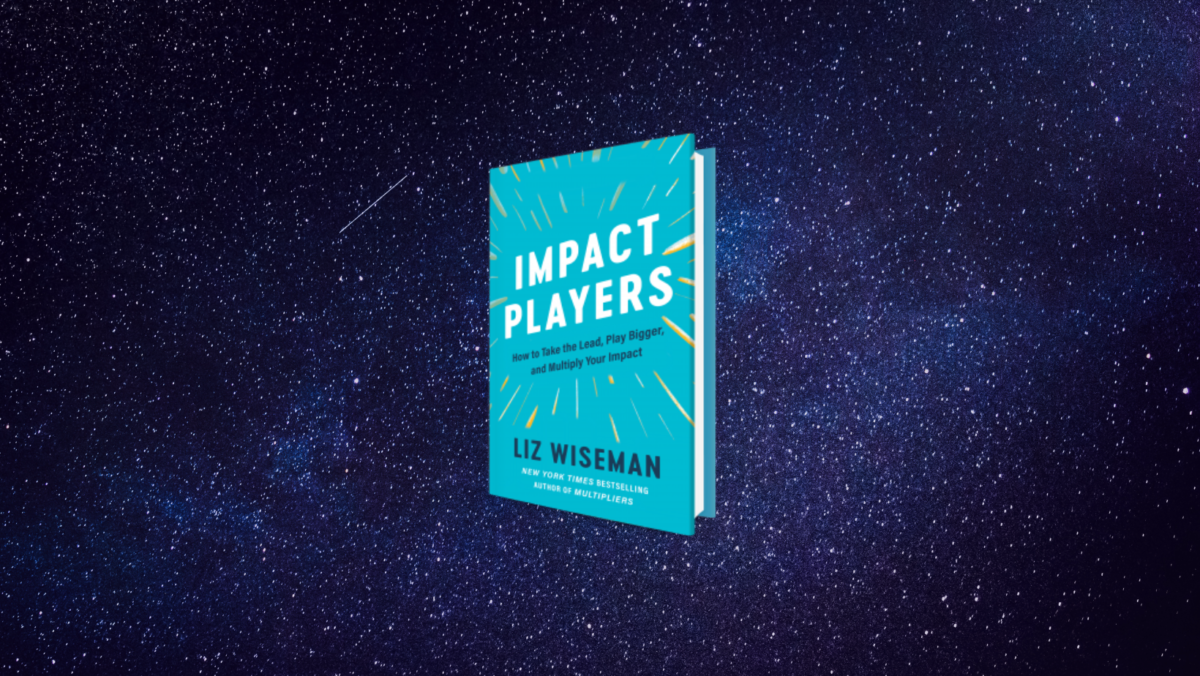
Impact Players: Who are they?
There is a new area at Montevideo Labs composed of five special individuals with whom I have the pleasure to work with. The Talent’s team conversations tend to vary from a wide range of topics, from nice places to eat to Taylor Swift’s latest album release. But life is not only about food and contemporary pop stars. When discussing this blog’s topic, my colleague Magdalena brought up an interesting concept: Impact Players and how to become one. The woman behind this idea is Liz Wiseman, executive advisor, researcher and bestselling author. Liz teaches leadership around the world and has worked with giants such as Apple, Google, Disney, Facebook, to name a few. On Brené Brown’s Dare to Lead podcast series, she discussed what it takes to be an Impact Player and why we need more people like this in our workspace.
By Impact Players, Wiseman refers to those people who are present, open to feedback, flexible and curious. Something that resonated within me was the idea that they “make work light” (Wiseman, 2021). This does not mean that they don’t take work seriously, but that they make work easy. In other words, they create a friendly environment for everyone around the office.
Impact players are those people that you would love to have in your team. They wear “opportunity goggles” (Wiseman, 2021) and have a readiness attitude. They are willing to help, but they are also willing to step back and listen. Liz also portrays this idea by stating that these people are loved by their bosses and team members as well.
At this point, you may have someone in mind. But what are the characteristics of an Impact Player and how can we become one of them?
What makes an Impact Player?
Liz and Brené discussed several aspects that shape the personality of an Impact Player. They talked about having a welcoming attitude, dealing with ambiguity, being self-managed, flexible and confident. However, I believe all these traits lie upon a bigger concept: vulnerability. We tend to think of vulnerability as a weakness, when in fact, we don’t choose to be vulnerable. A good way of dealing with vulnerability is to try and integrate it in a healthy way. This may require asking for help, taking risks or stepping back and letting others take the lead. Thus, having the ability to delegate, being our own boss and sticking to the fact that we are simple mortals who can’t deal with everything could be a nice place to start.
An Impact Player is a person that is confident, but humble. In this aspect, Liz discusses the relationship between “safety and stretch” (Wiseman, 2021). In this relationship, the leader’s ability to challenge their coworkers while creating a safe space is at stake. However, one’s potential to move between the space provided should also be taken into consideration. If we compare this safety – stretch relationship with the open sea, we could picture an Impact Player smoothly surfing their way through. In other words, Liz discusses the leader’s ability to show their team how to float, whilst encouraging them to surf the bigger waves.
What’s their game?
So far, we have explored what Impact Players are made of. But how can we identify them in a typical workday? How do we recognize their game?
Liz describes them as collaborative people who are always willing to help. These people are like bees, buzzing around several teams and joining different initiatives. However, there is another type of Impact Player, a more chameleon-like type of person. They tend to be silent and go under the radar, but their presence and work are vital. As you may see, there are different ways of adapting these characteristics to your own personality.
During the podcast series, Liz gives an example of a teammate that took the liberty to make a brief summary of a long report that she had to read. This has to do with going beyond having the work done and going a step further to grease the wheels for others. For this reason, Liz describes these people as “low maintenance” (Wiseman, 2021). They remove the phantom workload for themselves and others.
Moreover, they know how to create balance between work and fun. An Impact Player may excel professionally and always be open to have a good laugh or chat about their favorite TV show too. Their curiosity is another trait that differentiates them from the pack. In this sense, Montevideo Labs’ culture showed me the importance of taking the time to get to know our coworkers and having fun around the office. Inevitably, making work light becomes a value that should be taken seriously, since it rests in the background for a positive workspace.
At the end of the day, it is all about being a confident and self-assured person who knows their game and trusts its value. Impact Players are ready to score goals but also make a winning pass. I’m not saying it’s easy, but it’s worth giving a try.
Becoming an Impact Player
The truth is, there is no magic recipe or instruction brochure on how to become an Impact Player. However, there are a few things we could do to add value.
Personally, I believe communication is key. There may be times when work gets rough, and this may cause frustration. That’s why interpersonal relationships are so important to create a smooth atmosphere, as well as taking the time to maintain this safety – stretch balance.
A good way to start is being self-aware by understanding what is helping to get work done and what is blocking me from doing it. At Montevideo Labs, we create snippets (short status updates) at the end of each week. Communicating our difficulties and small victories to the rest of the team enables us to get in sync about what is going on. This may be a useful tool when something is not working smoothly, as well as a – nice to have – attitude.
Another way of becoming an Impact Player, from my point of view, is to take fun more seriously. When I find myself stuck at work, I challenge my teammates to a pool game. This helps me distract myself for a few minutes, have some fun, get some blood pumping (I take pool games very seriously) and get back to work with a fresh mind. Knowing our limits and taking advantage of this knowledge may help us strike the right balance.
To sum up, these are a few things we can do to become Impact Players in our workspace: communicating and “making work light” (Wiseman, 2021) bringing our game to the table, being sure of its worth and understanding our boundaries. Some questions we can make ourselves to follow an Impact Player’s path, by courtesy of our CEO, are: Have I helped someone this week? How can I reconcile two points of view? How can I remove the top two frustrations of my team?
Now that you know what an Impact Player is, don’t be afraid to put these skills into practice! Remember that a small change in attitude always makes a great difference ☺.